The Risk of Storing Old Hard Drives vs Recycling Them
Are the hard drives in your office supply closet safe? Learn why storing drives is a bigger risk than recycling them & how it hurts your business.
Why is keeping old hard drives more risky than recycling?
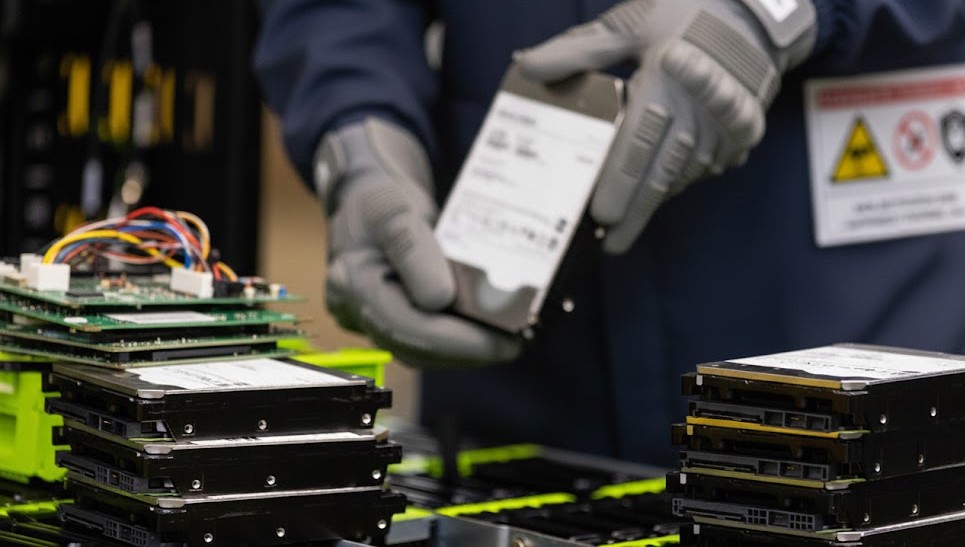
Old hard drives piled up in office cupboards or storerooms are actually a digital time bomb. If you think storing them without recycling them will keep your data safe, you are putting yourself at a major risk.
Below are the main reasons for this:
1. Data Breach Risk
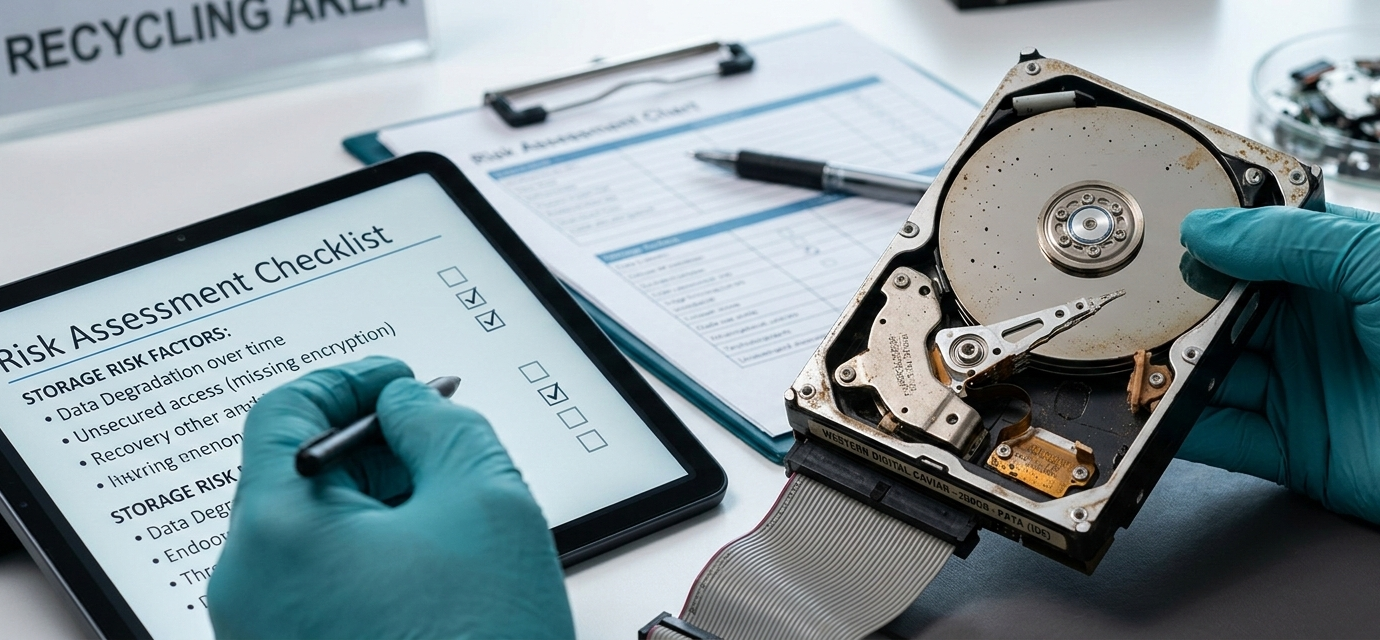
Hard drives in closets are usually not encrypted or protected by a password. If a rogue employee or outsider removes even one drive, your entire organization's data can be exposed.
Problem: It only takes one hard drive to cause a major data breach.
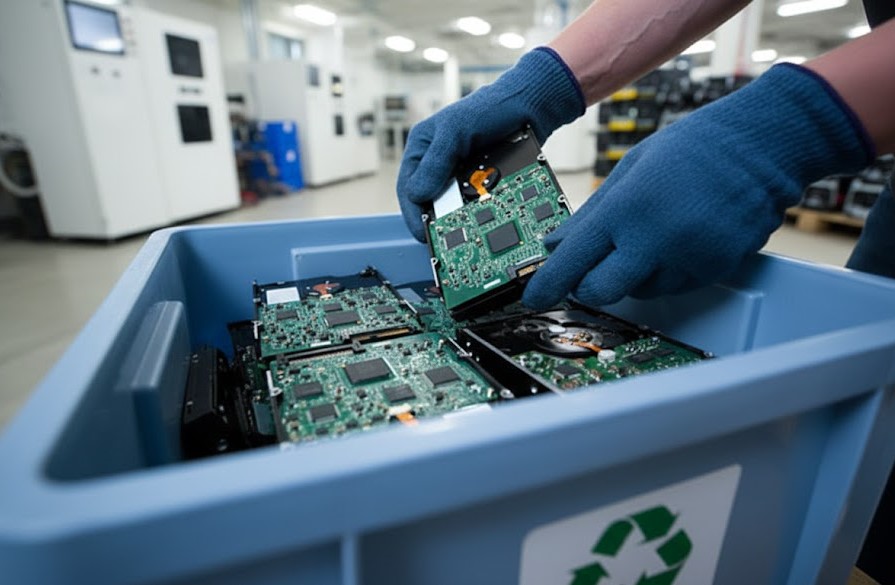
Solution: Drives are directly destroyed in professional recycling, or data destruction leaves no room for theft.
2. Loss of Inventory Management & Chain of Custody
The more drives you keep, the harder it becomes to keep track of them.
Risk: If there are 100 drives in a storeroom and 1 drive goes missing, no one will be able to notice it. This is called an Internal Theft Opportunity.
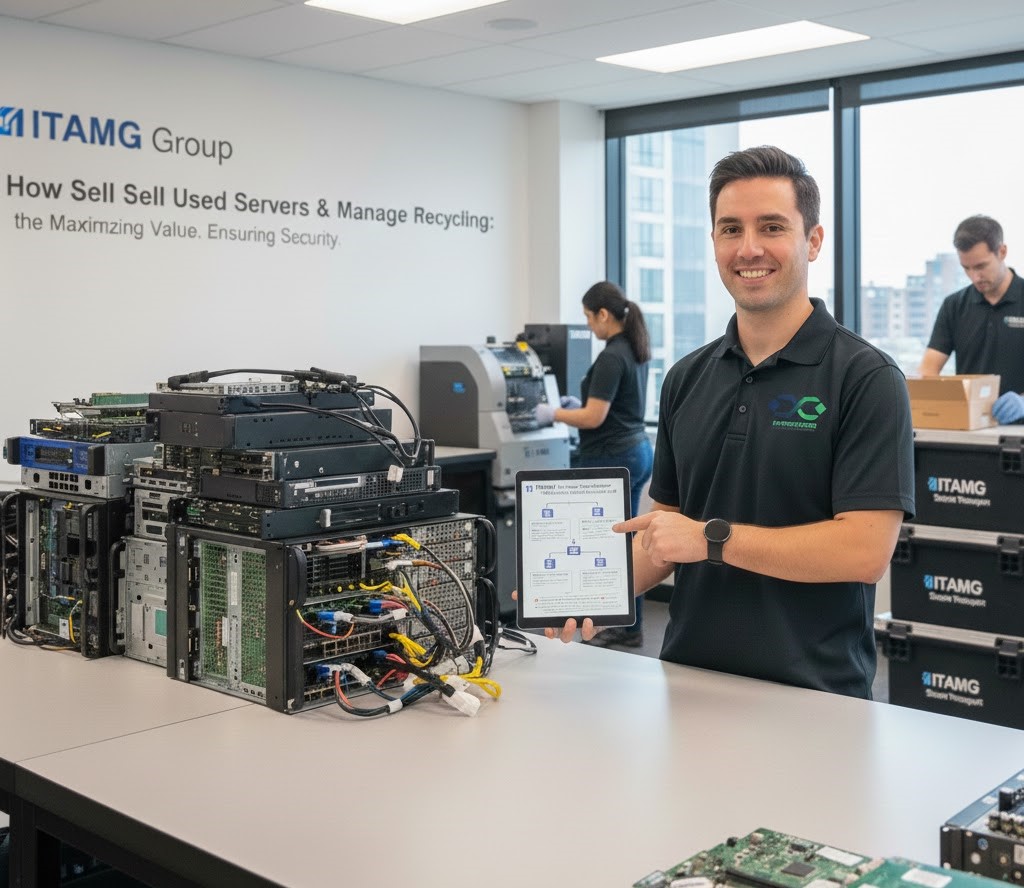
ITAD Advantage: The recycling vendor scans the serial number of each drive to create an accurate audit trail, which is not possible when stored in a storage room.
3. Constant Depreciation
Hard drives are not just data storage devices. They are financial assets.
Risk: As you store the drives, their market value decreases every day.
Opportunity: The return on investment (ROI) you would get if you recycle or resell it today will be nothing more than scrap metal in 2 years.
4. Environmental & Fire Hazards
Older electronics contain Lithium-ion batteries (if included with laptops) or magnetic components. They can rust or leak chemicals if left in a damp or closed place for long periods of time. Also, stacked electronics help to spread fire during any accidents.
Lithium-ion batteries degrade over time and can swell, leak, or ignite in poorly ventilated storage areas.
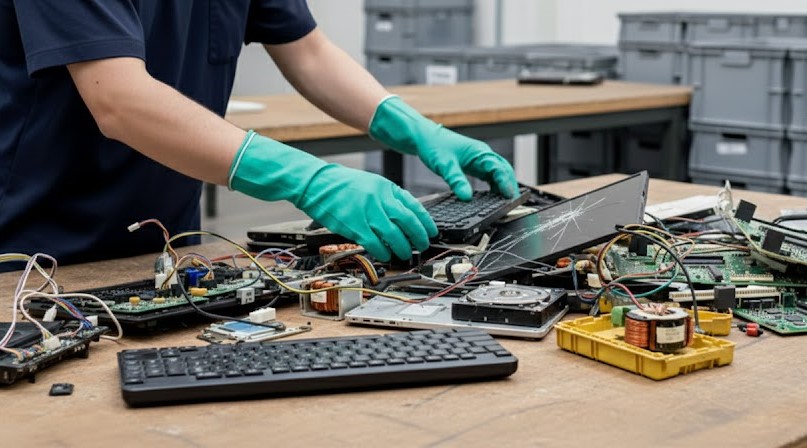
Magnetic components and aging circuit boards can corrode and release harmful chemicals in damp environments.
Densely stacked electronics act as fuel and accelerate fire spread during accidents or emergencies.
5. Legal & Compliance Complications
According to data protection laws such as HIPAA, GDPR, or SOC2, it is mandatory to destroy data within a certain period when it reaches end-of-life. Simply storing the drives offers no legal protection. These accumulated drives can lead to hefty fines during an audit.
HIPAA, GDPR, and SOC2 all require documented data destruction at end-of-life, not indefinite storage.
Unprocessed drives sitting in a storeroom provide zero legal protection during a regulatory audit.
Accumulated non-compliant devices are a direct liability that auditors can use to issue significant fines.
Frequently Asked Questions
Stop Collecting, Start Recycling
Do not dismiss old hard drives as “useless.” Every drive lying around in your storeroom is a potential data breach point. With a safe and certified recycling process, you not only reduce risk, but you also secure your office space and financial future.
Remember: IntegriTrade LLC has no record of a data breach in its history. When you work with us, your data security and your asset value are in safe hands.