Chain of Custody in ITAD: Why Tracking and Documentation Matter
A clear chain of custody is the backbone of secure IT Asset Disposition. Here's what it means, why it protects your data, and what to expect from a qualified ITAD partner.
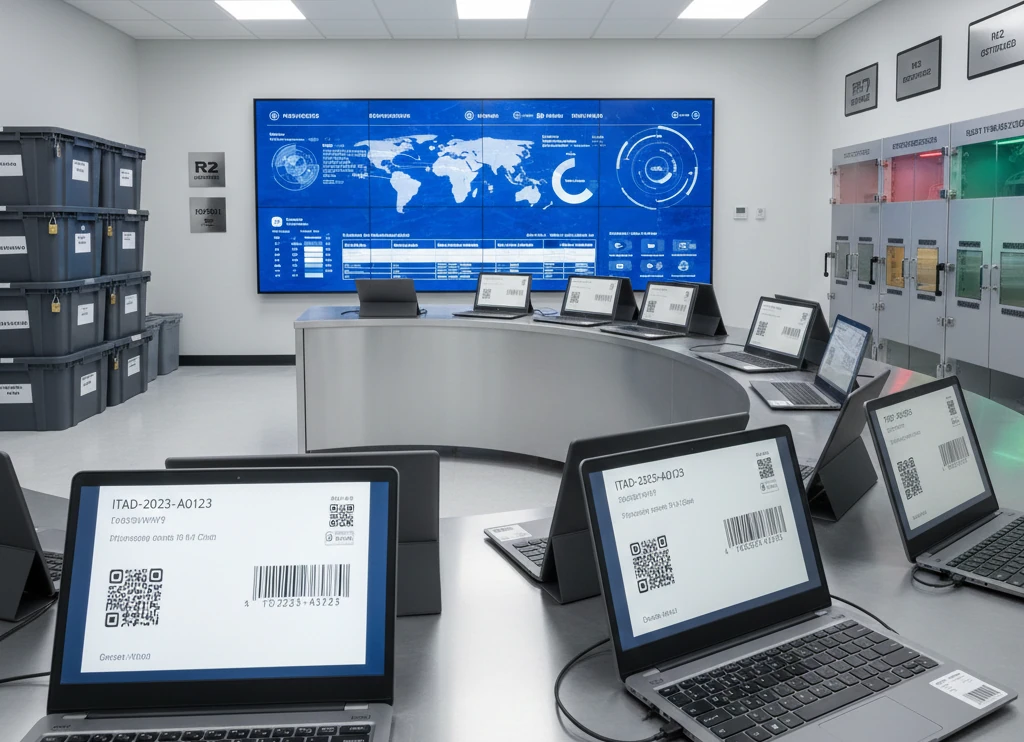
When organizations retire laptops, servers, and storage devices, attention usually goes to data destruction and recycling. The piece that quietly determines whether the entire process holds up under scrutiny is chain of custody.
A documented, transparent chain of custody protects sensitive data, supports compliance, and gives leadership confidence that nothing slipped through the cracks.
What Chain of Custody Means in ITAD
Chain of custody is the documented tracking of IT assets from the moment they leave an organization's control through final disposition. Every transfer, handler, and processing step is recorded.
Collection and handover
The exact time assets are picked up and the personnel responsible for the initial transfer are recorded.
Custody and location
Every party that handles the assets and every facility where they are stored or processed is logged in sequence.
Actions and final disposition
Data sanitization, destruction, refurbishment, and recycling activities are documented through to the final outcome of each asset.
Why It Matters for Data Security
Retired devices often still hold sensitive data. Without clear tracking, the gap between pickup and final disposition becomes a real exposure point one that auditors, regulators, and threat actors all know to look for.
A strong chain of custody confirms that assets remain accounted for in transit, that only authorized personnel handle data-bearing devices, and that destruction activities can be independently verified. For regulated environments, this is a foundational security control rather than a nice-to-have.
Compliance and Regulatory Alignment
Healthcare, financial services, government, and enterprise organizations all operate under regulations that require secure handling of sensitive data. Chain of custody documentation produces the audit-ready records that demonstrate due diligence and reduce legal exposure.
Standards commonly associated with ITAD such as R2 certification and ISO-aligned management systems emphasize documentation, traceability, and controlled processes. A qualified provider builds these requirements into the workflow rather than treating them as an afterthought.
Documented vs. Undocumented Disposition
The difference between a documented chain of custody and informal handling becomes clear during an audit or incident.
Key Elements of an Effective Process
A defensible chain of custody combines several disciplines that work together to produce a complete record.
Asset identification
Serial numbers, asset tags, or unique identifiers are captured at intake so each device can be tracked individually rather than as a batch.
Secure transportation
Controlled logistics, vetted personnel, and documented transfers protect assets between facilities and close the most common exposure window.
Controlled processing environments
Restricted-access facilities with monitoring ensure that only authorized staff handle data-bearing equipment.
Action logging and final records
Sanitization, destruction, and recovery activities are logged at the asset level, with confirmation of recycling, resale, or destruction at completion.
Common Gaps to Avoid
Most chain of custody failures come from a small set of recurring mistakes.
Undocumented handoffs
Transferring assets without signed records creates blind spots that cannot be reconstructed later.
Unclear vendor accountability
When multiple downstream partners are involved, responsibility for each asset must remain explicit at every stage.
Tracking that stops after pickup
A chain that ends at the loading dock leaves the most sensitive part of the process the time between pickup and destruction unverified.
Incomplete reporting
Missing serial numbers, mismatched counts, or inconsistent certificates make audits painful and weaken the entire program.
Documentation You Should Receive
A qualified ITAD provider produces clear records at every stage so internal teams and auditors can verify outcomes without guesswork.
Asset inventory
A complete list of every device received, identified by serial number and condition.
Certificates of erasure or destruction
Verified documentation for each unit confirming the standard applied and the outcome.
Sanitization and processing reports
Detailed records of the methods used and a summary of how each asset was ultimately resold, refurbished, or recycled.
Frequently Asked Questions
It is the documented tracking of IT assets from the moment they leave an organization's control through final disposition, covering every transfer, handler, and processing step.
It confirms assets are not lost or mishandled, restricts access to authorized personnel, and allows destruction activities to be independently verified.
Expect asset inventories, certificates of erasure or destruction, sanitization reports, and a complete chain of custody record from pickup through final disposition.
It provides audit-ready records that demonstrate due diligence, support internal and external reviews, and reduce regulatory and legal risk.
Undocumented handoffs, unclear vendor accountability, tracking that stops after pickup, and inconsistent reporting are the failures we see most often.
Final Thoughts
Chain of custody is what turns IT Asset Disposition from a logistical task into a defensible security and compliance program. Clear tracking, accurate documentation, and unbroken accountability are what separate a reliable ITAD partner from a risky one.
When evaluating providers, look closely at how they handle the steps between pickup and final disposition. That is where the strength of the program is decided.