
Our data destruction methods
No single sanitization technique applies to every storage medium. We match each asset class - from NVMe drives to magnetic tape - to its federally aligned destruction protocol, executed inside our secure Fresno facility and validated with serialized Certificates of Destruction.
Approved Destruction Methods by Storage Media
Improper destruction leaves recoverable data behind. Use the matrix below to match your asset types to verified sanitization procedures.
Rotary Hard Drives (HDDs)
NIST 800-88 Purge (Firmware / Crypto Erase)
Effective · NIST Purge
High-Gauss Degaussing (Magnetic Field)
Effective · Platters Demagnetized
Rotary Shear Shredding (~38 mm / 1.5" Strip-Cut)
Effective · NIST Destroy
Solid-State Disintegration (≤2 mm Micro-Shred)
Incompatible · Chassis Damaging to Knives
Solid-State & NVMe Drives
NIST 800-88 Purge (Firmware / Crypto Erase)
Effective · Firmware Block / Crypto
High-Gauss Degaussing (Magnetic Field)
Ineffective · Zero Magnetic Effect
Rotary Shear Shredding (~38 mm / 1.5" Strip-Cut)
Ineffective · NAND Chips Fall Through
Solid-State Disintegration (≤2 mm Micro-Shred)
Effective · NIST Destroy
Smartphones & Tablets
NIST 800-88 Purge (Firmware / Crypto Erase)
Effective · Cryptographic Wipe
High-Gauss Degaussing (Magnetic Field)
Ineffective · Zero Magnetic Effect
Rotary Shear Shredding (~38 mm / 1.5" Strip-Cut)
Ineffective / Hazard · NAND Survival / Battery Fire
Solid-State Disintegration (≤2 mm Micro-Shred)
Effective · Requires Battery Removal
USB Drives & SD Cards
NIST 800-88 Purge (Firmware / Crypto Erase)
Impractical · Lacks Firmware Purge
High-Gauss Degaussing (Magnetic Field)
Ineffective · Zero Magnetic Effect
Rotary Shear Shredding (~38 mm / 1.5" Strip-Cut)
Ineffective · Bypasses Shredder Teeth
Solid-State Disintegration (≤2 mm Micro-Shred)
Effective · Pulverizes Memory Dies
LTO & Magnetic Backup Tapes
NIST 800-88 Purge (Firmware / Crypto Erase)
Impractical · End-to-End Overwrite
High-Gauss Degaussing (Magnetic Field)
Effective · NIST Purge
Rotary Shear Shredding (~38 mm / 1.5" Strip-Cut)
Ineffective · Ribbons Survive Strip-Cut
Solid-State Disintegration (≤2 mm Micro-Shred)
Incompatible · Ribbons Jam / Blind Screens
Degaussing Inefficacy on Solid-State Media
Solid-state drives (SSDs), mobile devices, and USB flash memory store data via electrical charges within NAND chips rather than magnetic domains. Degaussing has zero sanitization effect on non-magnetic storage, leaving all stored data completely intact and readable.
Particle Size Standards for Flash Media
High-density flash chips are small enough to pass intact through conventional mechanical shredder blades, risking data remanence. Solid-state assets require high-security micro-shredding (≤ 2 mm particle size) to physically pulverize the storage dies.
Functional Prerequisites for Software Erasure
Cryptographic erasure and overwrite protocols require fully operational read/write heads and controller access. Non-functional, damaged, or unmountable drives cannot be logically sanitized and must proceed directly to certified physical destruction.
Certified Software Erasure & Sanitization
Preserving residual hardware value through verified, non-destructive data elimination
Assets are cryptographically sanitized and independently verified, preserving hardware integrity for redeployment, lease return, or resale remarketing. Our network-based PXE boot infrastructure supports automated, high-throughput batch processing across entire server racks simultaneously - eliminating serial processing bottlenecks and minimizing chain-of-custody exposure.
- Equipment
- Blancco and WipeOS, both ADISA-verified
- Media
- HDDs, SSDs, NVMe drives, phones, tablets, and computers
- Standard
- NIST 800-88 baseline, adjustable to your requirements
- Output
- Serialized Certificate of Erasure for every asset
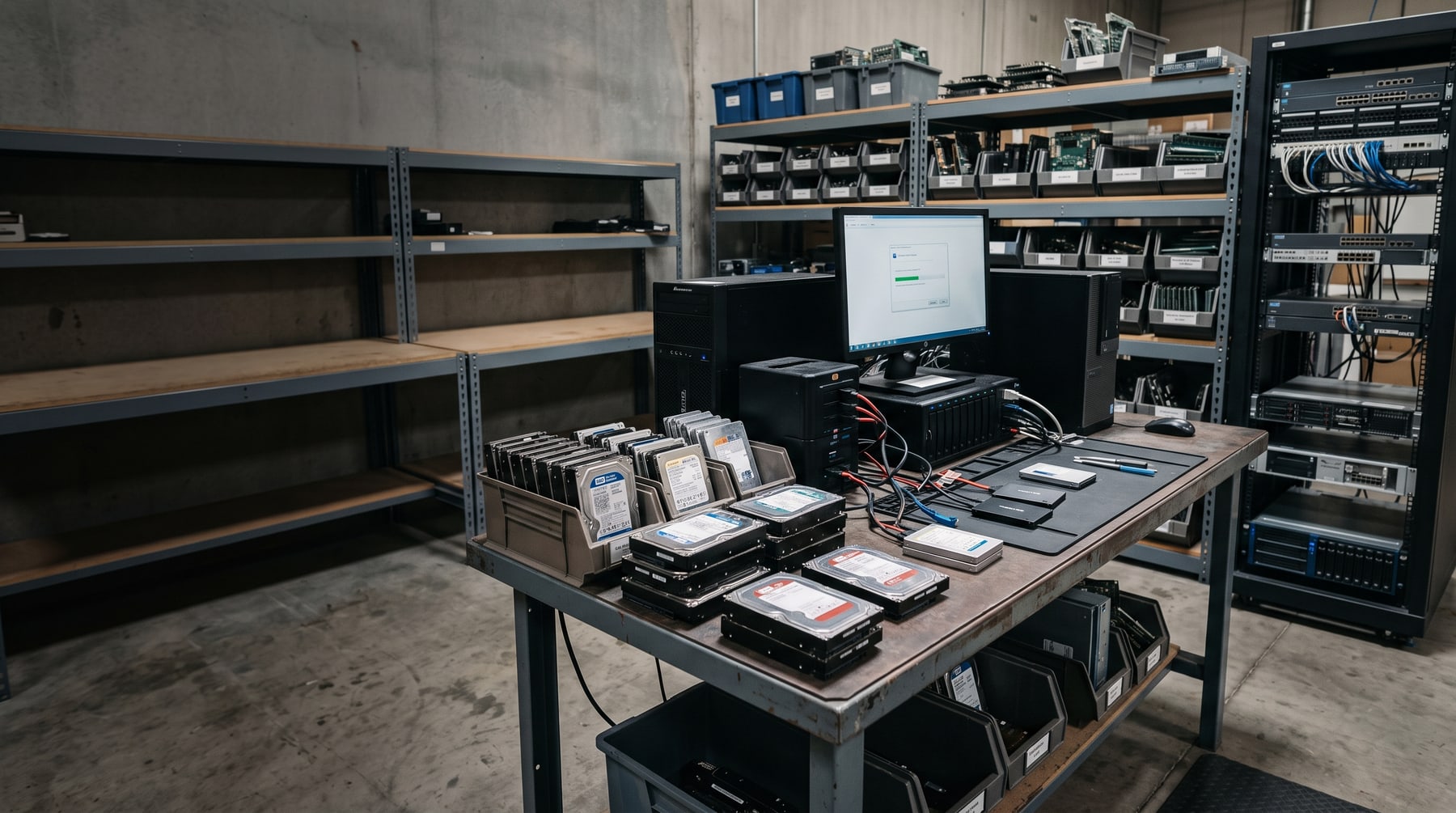
Magnetic Degaussing & Mechanical Shredding
Dual-stage sanitization ensuring complete magnetic neutralization and physical destruction for non-reusable storage media.
For end-of-life magnetic assets, we execute a defense-in-depth destruction protocol combining magnetic field purging with mechanical disintegration. Drives and tapes first pass through a high-field degausser to permanently neutralize magnetic domains at the substrate level, followed by industrial shredding to render the media physically irrecoverable. While either process independently satisfies baseline compliance benchmarks, combining both protocols eliminates data remanence risk in high-security environments.
- Degausser
- Verity Datagauss ZZ001208
- Shredder
- Proton Data Security Model 104
- Supported Media
- 2.5" & 3.5" Hard Disk Drives (HDDs), LTO Cartridges, and Enterprise Magnetic Tape
- Standard
- NIST 800-88
- Output
- Serialized Certificate of Destruction (TraceTech-tracked)
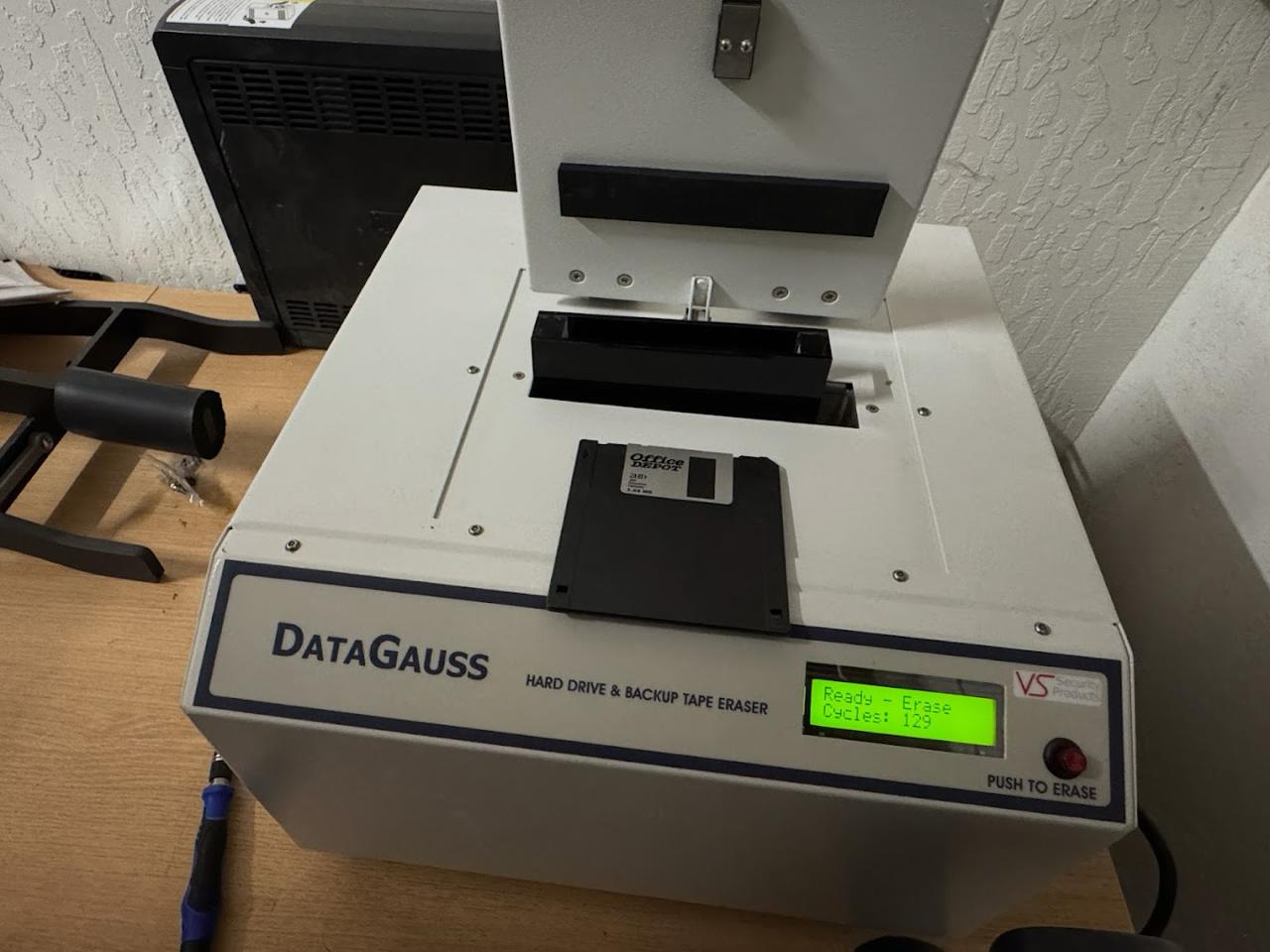
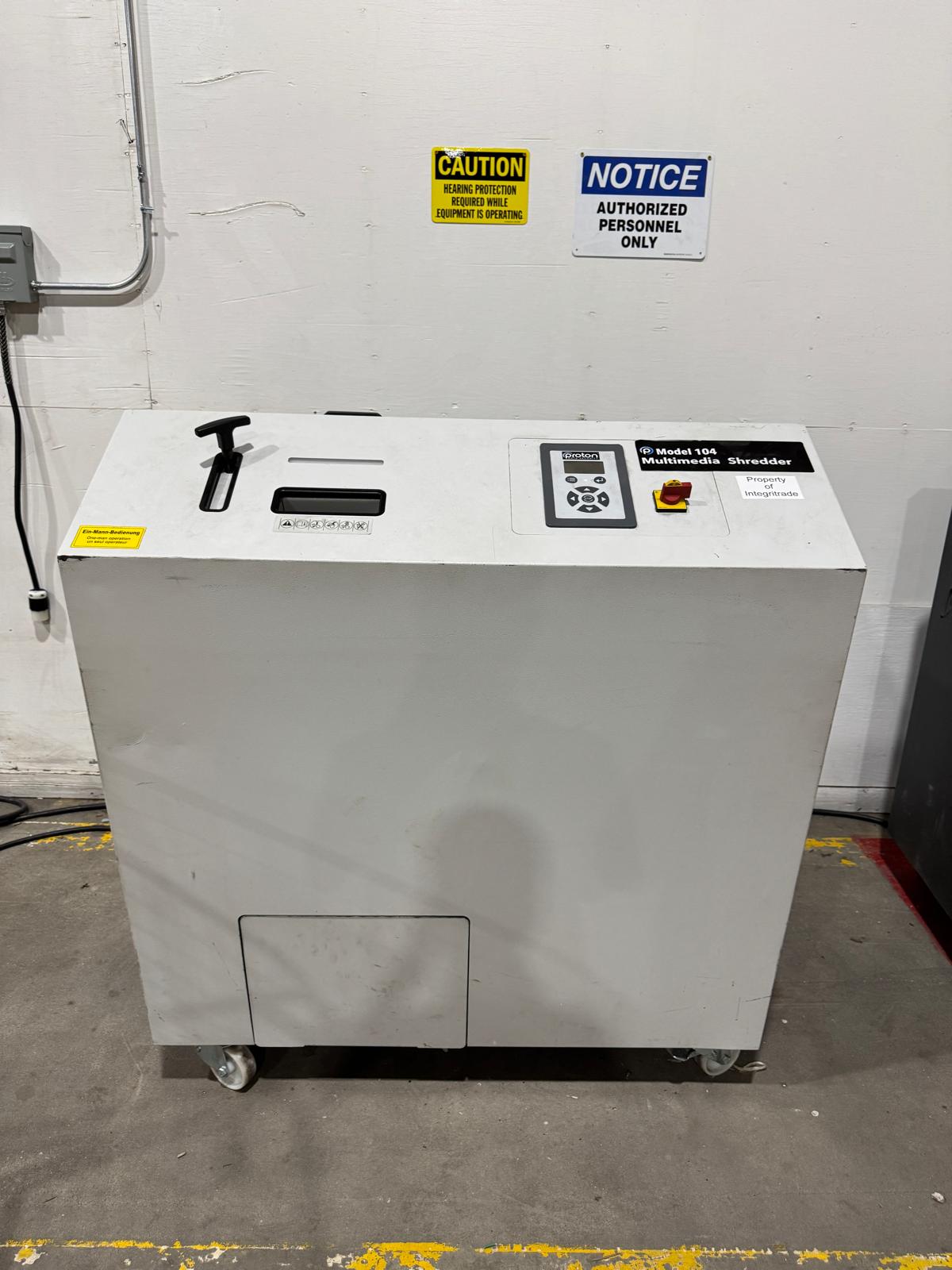
Solid-State Disintegration & Micro-Shredding (≤ 2 mm)
High-security physical destruction engineered specifically for high-density flash architecture and embedded silicon dies.
Because solid-state memory relies on micro-scale NAND flash dies, these chips can slip through standard coarse mechanical shredder blades fully intact. Our precision disintegration system pulverizes solid-state media into a nominal ≤ 2 mm particle size, fracturing individual semiconductor dies and rendering forensic lab recovery physically impossible.
- Equipment
- SEM Model 2 SSD-VK
- Particle size
- 2 mm
- Supported Media
- Enterprise & Client SSDs (2.5", U.2, M.2 NVMe, mSATA), Removable Flash (USB, SD, microSD), and Mobile Logic Boards
- Output
- Serialized Certificate of Destruction (TraceTech-verified)
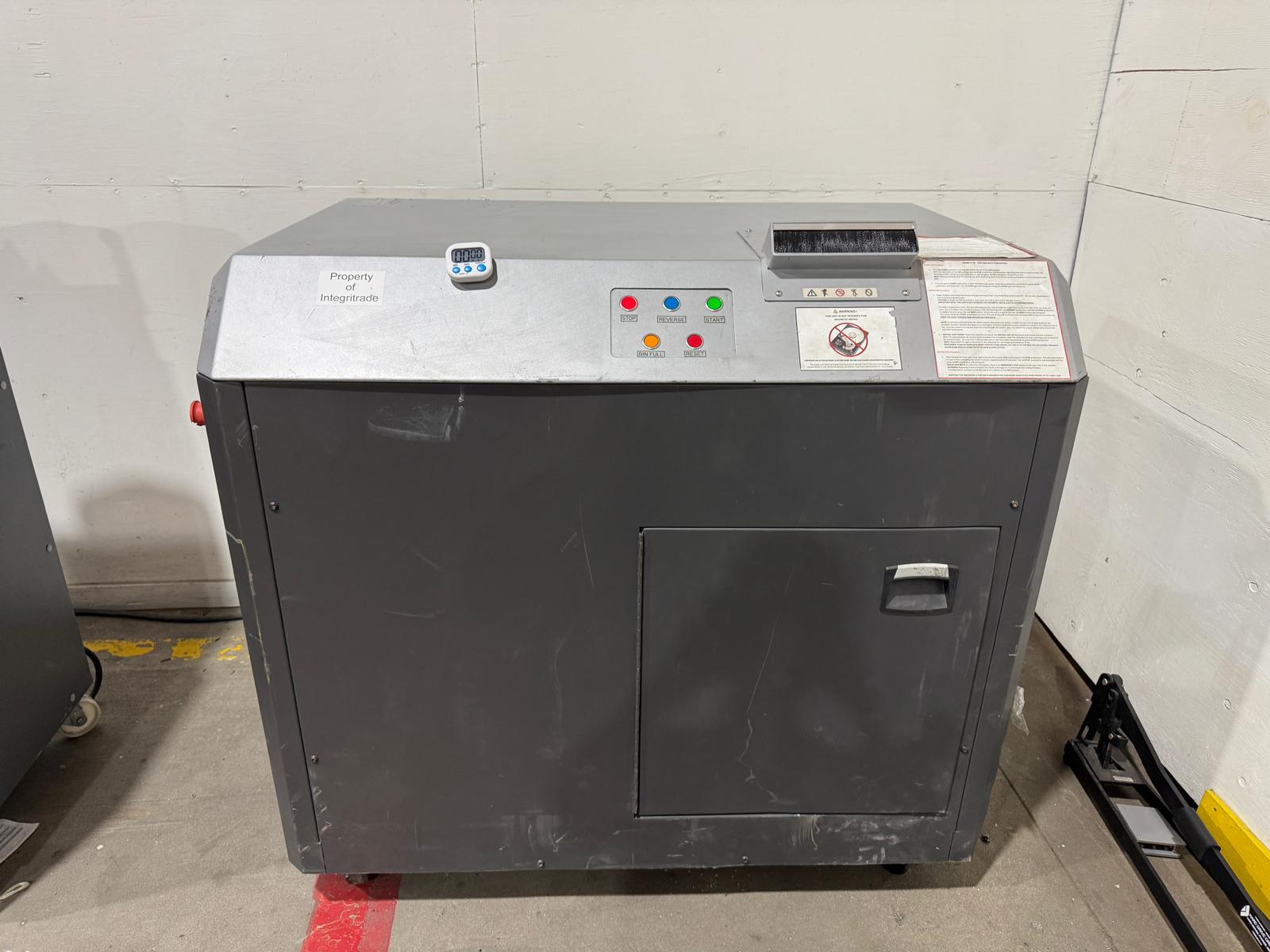
Site visits welcome. Walk the floor before you sign.
We host scheduled facility tours for prospective clients and auditors. Bring your compliance lead. They'll see the same process your retired devices will go through.
- Facility
- 944 S Topeka Ave
Fresno, CA 93721 - Direct Line
- (559) 325-4813
Contact Us for a Free Consultation
Tell us about your retired IT assets and our team will respond within one business day.