Understanding the Importance of IT Asset Disposition
Learn why IT asset disposition is critical for data security, compliance, and sustainability, and how proper ITAD protects organizations.
Why IT Asset Disposition Matters in Today's Digital World
As organizations continue to digitize operations, upgrade infrastructure, and adopt cloud technologies, one critical area often receives less attention than it deserves: what happens to IT assets at the end of their lifecycle.
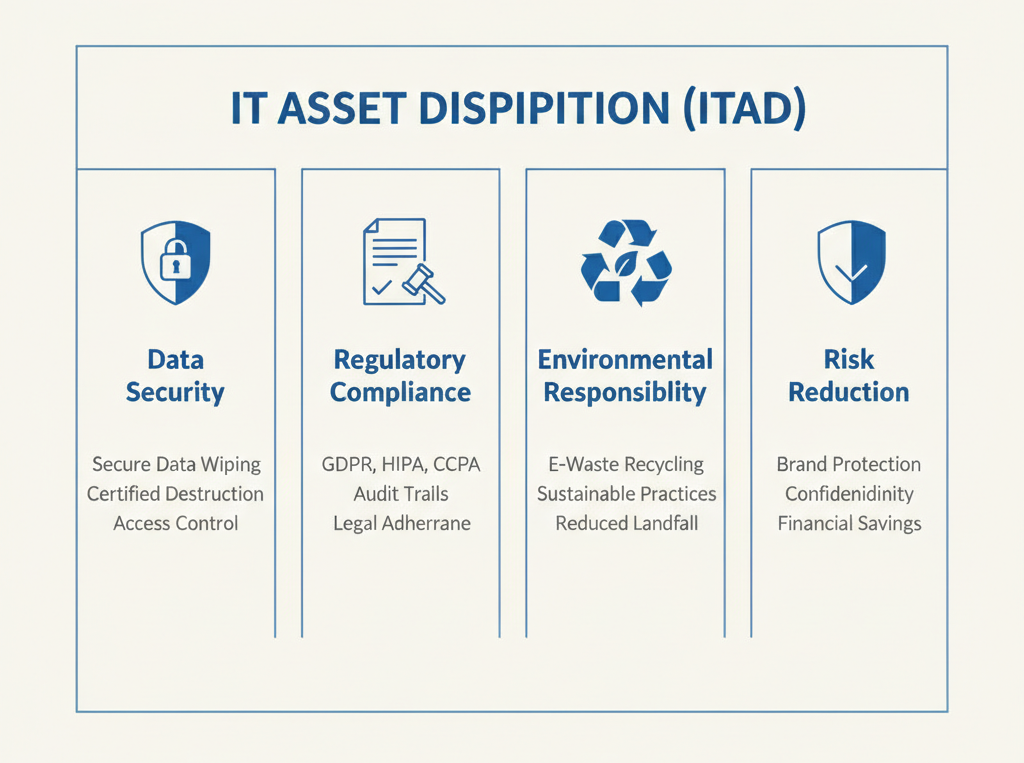
IT asset disposition is not simply about throwing away old hardware. It is a structured, governed, and security-critical process that protects sensitive data, ensures regulatory compliance, supports environmental responsibility, and reduces organizational risk.
What Is IT Asset Disposition (ITAD)?
The strategic approach to retiring IT assets securely and responsibly
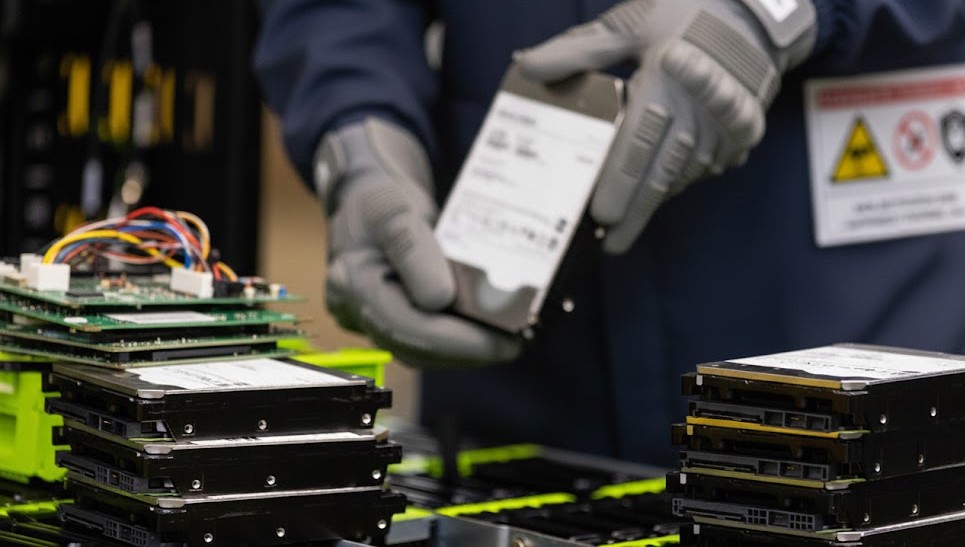
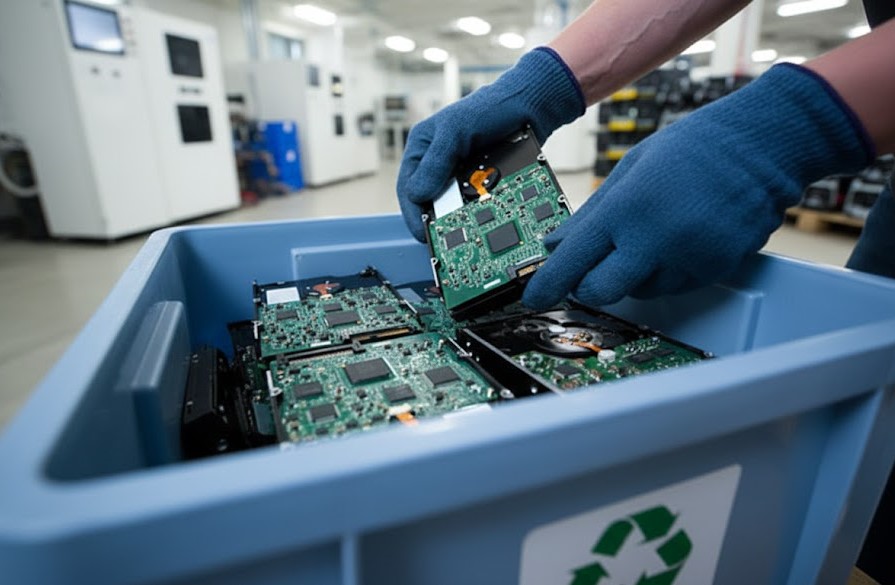
IT Asset Disposition (ITAD) refers to the process of securely and responsibly managing IT equipment that is no longer needed by an organization. This includes the decommissioning, data sanitization, recycling, reuse, or destruction of IT assets in accordance with security, legal, and environmental standards.
ITAD vs IT Asset Disposal
Types of IT Assets Covered Under ITAD
Comprehensive coverage for all data-bearing technology assets
Laptops and Desktops
End-user computing devices containing sensitive data
Servers & Data Center Equipment
Critical infrastructure with sensitive business data
Storage Media
HDDs, SSDs, backup tapes, and USB drives
Mobile Devices
Smartphones, tablets, and portable devices
Networking Equipment
Routers, switches, firewalls with configuration data
IoT & Peripheral Devices
Printers, scanners, and connected devices
Why IT Asset Disposition Is Critical for Organizations
Protecting your business across multiple dimensions
Data Security and Breach Prevention
Protects sensitive customer and employee data, financial records, and intellectual property through secure data removal methods
Regulatory and Legal Compliance
Ensures compliance with GDPR, HIPAA, and other regulations to avoid fines, lawsuits, and failed audits
Environmental Responsibility
Supports sustainability through reuse, remarketing, and certified recycling of e-waste
Financial and Operational Benefits
Recovers residual asset value, reduces storage costs, and improves operational efficiency
Key Stages of the IT Asset Disposition Process
A multi-stage process maintaining control throughout asset retirement
Asset Decommissioning & Inventory Control
Formal retirement from active use with updated inventory systems tracking asset status, ownership, and condition
Data Sanitization & Secure Destruction
Approved data removal methods including logical wiping, cryptographic erasure, or physical destruction following NIST 800-88 guidelines
Logistics & Chain of Custody
Secure transport with asset tracking, controlled logistics, and documented custody transfers
Recycling, Reuse & Final Disposal
Responsible disposition through certified recycling, refurbishment, or environmentally compliant destruction
ITAD Compliance Standards and Certifications
Industry-recognized standards for secure and compliant ITAD
NIST 800-88 Guidelines
Widely recognized standard for media sanitization, defining methods for clearing, purging, and destroying data based on sensitivity and risk assessment.
R2 Certification
Responsible Recycling certification ensuring data security, environmental protection, and operational transparency.
ISO 14001
Environmental management system certification demonstrating commitment to sustainable practices.
Common IT Asset Disposition Risks and Mistakes
Avoidable pitfalls that increase organizational liability
Using Uncertified or Informal Disposal
Increases liability and reduces control over sensitive data
Inadequate Documentation
Lack of audit trails prevents compliance proof during investigations
Lack of Policy and Governance
Ad-hoc handling fails to integrate ITAD into risk management frameworks
Who Needs a Strong IT Asset Disposition Strategy?
Organizations that handle technology and data
Best Practices for Effective IT Asset Disposition
Proactive measures for security and compliance
Align ITAD with IT Governance
Integrate ITAD policies with broader IT governance, security, and risk management strategies for consistency and accountability.
Regular Process Reviews
Regularly review ITAD policies to reflect new regulations, emerging technologies, and changing business needs.
Employee Training and Awareness
Ensure employees involved in asset handling understand their responsibilities and risks associated with improper disposal.
Final Thoughts: ITAD as a Strategic Priority
IT asset disposition is no longer a back-office function—it is a strategic priority. Proper ITAD protects sensitive data, ensures compliance, supports sustainability, and strengthens organizational resilience.
By understanding the importance of IT asset disposition and implementing a structured approach, organizations can reduce risk, preserve value, and demonstrate responsible IT governance in an increasingly regulated digital world.