ITAD vs Electronic Recycling: Understanding the Difference and Why It Matters
The two terms often get used interchangeably, but they describe very different processes. Confusing them can quietly create data security risks, compliance gaps, and lost recoverable value.
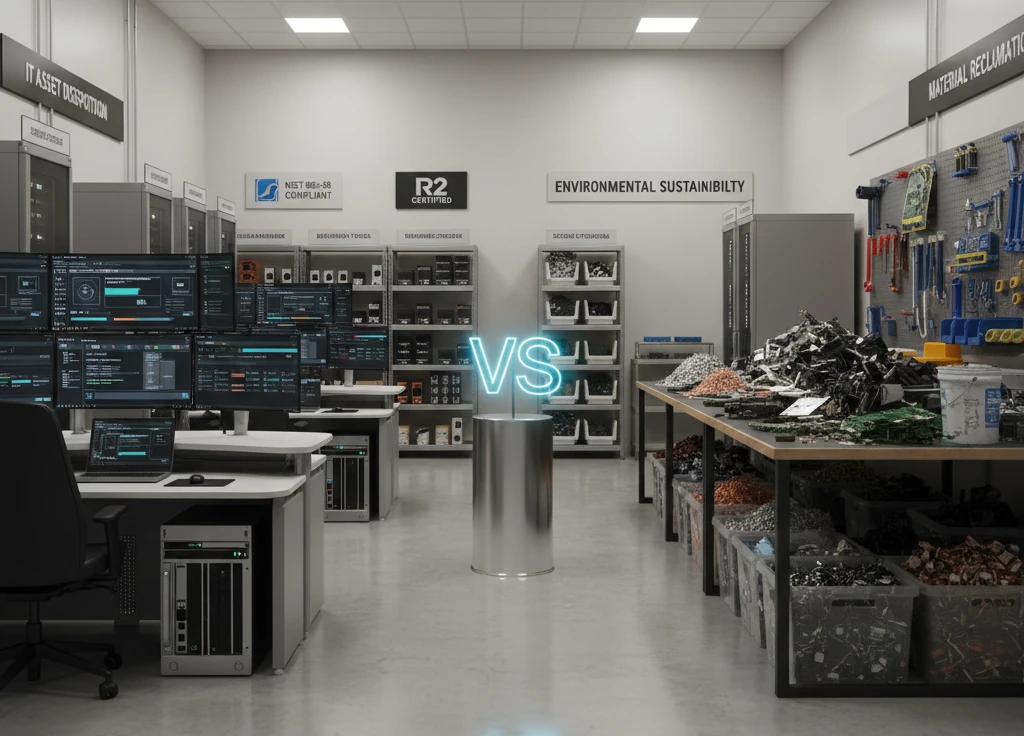
When organizations retire laptops, servers, and networking equipment, the terms IT Asset Disposition (ITAD) and electronic recycling get used as if they mean the same thing. They don't. The two processes overlap in places, but their objectives, controls, and outcomes diverge in ways that matter directly to data security, compliance, and the financial return on retired assets.
Understanding the distinction is the difference between a defensible disposition program and one that quietly accumulates risk on the back end.
What IT Asset Disposition Covers
ITAD is a comprehensive process that manages retired IT equipment from decommissioning through final disposition. It's built around four priorities working in parallel: security, compliance, asset recovery, and responsible end-of-life handling.
A complete ITAD program covers secure data destruction or sanitization, asset tracking with documented chain of custody, evaluation for reuse, refurbishment, or resale, full reporting and certification for audit purposes, and responsible recycling for the assets that genuinely reach end-of-life. The result is a workflow designed to reduce risk, capture residual value, and produce the documentation regulators and auditors expect.
What Electronic Recycling Covers
Electronic recycling focuses on the physical processing of electronic waste. Devices are collected, dismantled, and broken down so that materials such as metals, plastics, and components can be recovered and fed back into manufacturing supply chains.
Responsible recycling matters and it's essential for sustainability. But on its own, electronic recycling does not necessarily address data security, chain-of-custody documentation, or asset value recovery. A device handed to a recycler with no ITAD framework around it may end up shredded with sensitive data still on board, or scrapped despite holding meaningful resale value.
ITAD vs Electronic Recycling: Side by Side
Although the two processes overlap, their objectives, controls, and deliverables produce very different outcomes for the organization retiring the equipment.
The cleanest way to think about it: electronic recycling is often the final step within an ITAD process, not a replacement for it.
Why ITAD Goes Beyond Recycling
Sending devices straight to a recycler without an ITAD framework around them creates real exposure. Data-bearing assets may still hold sensitive information if sanitization isn't performed correctly or documented to a recognized standard. Equipment with meaningful resale value gets scrapped because no one was looking. And there's no audit trail for any of it when the question eventually comes up.
ITAD ensures that data is securely wiped or physically destroyed before recycling ever happens, that assets are tracked throughout the disposition process, that reusable equipment is recovered rather than prematurely scrapped, and that organizations receive audit-ready documentation at the end of every project.
Security and Compliance Considerations
Regulatory frameworks across industries dictate exactly how sensitive data must be handled when IT assets are retired. Healthcare, financial services, government, and enterprise environments face strict obligations under HIPAA, GLBA, SOX, and various state privacy laws.
ITAD providers typically operate under R2 certification for responsible electronics reuse and recycling, data sanitization standards aligned with NIST 800-88 and DoD 5220.22-M, and information security management frameworks such as ISO 27001. Standard electronic recyclers may not provide the same level of security controls, certifications, or comprehensive reporting which is exactly why the distinction matters for data-bearing equipment.
The Role of Asset Recovery
One of the clearest distinctions between the two approaches is asset recovery. Many retired IT assets retain real market value if they're properly tested, sanitized, and refurbished value that disappears the moment a device enters a recycling stream by default.
ITAD programs evaluate every asset for reuse within the organization, refurbishment and resale through verified channels, or responsible recycling only when recovery is no longer viable. This recovery-first approach can offset disposition costs entirely and often turns the program into a net positive for the business, rather than treating all retired equipment as scrap by default.
Environmental Impact: Recovery First, Recycling When Necessary
From a sustainability perspective, extending the life of IT equipment through reuse or resale is almost always more environmentally beneficial than immediate recycling. Recovery reduces electronic waste, lowers demand for new manufacturing and the emissions that go with it, and keeps materials in productive use for longer.
Electronic recycling remains essential for genuine end-of-life assets. It's most effective when it sits inside a broader ITAD strategy that triages each device for the highest-value outcome first.
Choosing the Right Approach
For most organizations, the choice isn't ITAD or electronic recycling it's ITAD with recycling built in as the final step for assets that genuinely warrant it. The right framework depends on a handful of practical factors.
Data sensitivity and regulatory exposure
Equipment that has held PHI, financial records, or other regulated data needs the security and documentation that only structured ITAD provides.
Documentation and audit requirements
If audit trails, certificates, and chain-of-custody records will be requested at any point, those need to be produced as part of the disposition process not reconstructed afterward.
Asset recovery potential
For fleets with meaningful residual value, recovery-first ITAD can offset much of the disposition cost or generate net returns that recycling-only approaches simply leave on the table.
Sustainability and ESG goals
Verified outcomes whether through reuse, refurbishment, or certified recycling produce the documented sustainability data that increasingly appears in ESG reporting and investor disclosures.
Frequently Asked Questions
ITAD is a comprehensive lifecycle process covering data security, asset recovery, compliance, and recycling. Electronic recycling focuses primarily on material processing and waste reduction without necessarily addressing data security or asset value.
For most organizations, no. Anything that has held sensitive data needs the security, compliance, and documentation that only structured ITAD provides. Recycling alone doesn’t produce the audit trail or per-device verification regulators expect.
Yes ITAD typically includes electronic recycling as the final step for assets that can’t be reused or resold. The ITAD framework wraps around the recycling activity rather than competing with it.
Look for R2 (Responsible Recycling) certification, ISO 27001 for information security, and documented compliance with NIST 800-88 and DoD 5220.22-M data sanitization standards. These cover both the environmental and security halves of the equation.
ITAD produces documented chain of custody, certified data destruction, audit trails, and per-device reporting that meet regulatory requirements across HIPAA, GLBA, SOX, and government sector frameworks.
Final Thoughts
ITAD and electronic recycling serve different purposes, and treating them as interchangeable is where most disposition programs go wrong. Electronic recycling is essential for true end-of-life materials. ITAD is the framework that protects data, captures recoverable value, produces audit-ready documentation, and decides when recycling is actually the right answer.
Choosing the right approach turns IT asset disposition from a quiet liability into a controlled, defensible part of the IT lifecycle one that protects the business, recovers real value, and supports both compliance and sustainability outcomes at the same time.