Rapid Retail Store Clearance and Lease-Return Services in California
How Integritrade clears closing stores and lease-return sites across California on tight deadlines, with secure data sanitization, asset recovery, and industrial-equipment liquidation.
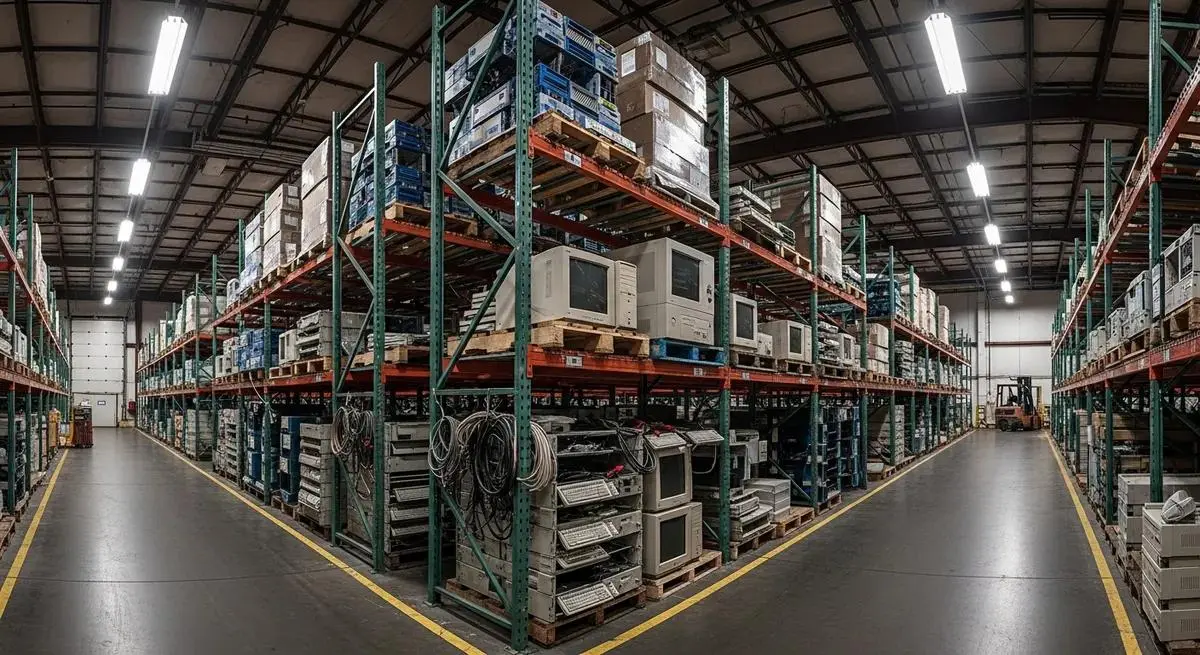
When a retail store closes because of bankruptcy, insolvency, relocation, liquidation, or a lease return, the priority is often speed: clear the premises, remove remaining assets, meet the surrender deadline, and leave the space ready for the landlord, lender, receiver, or next occupant. Computers, point-of-sale systems, servers, network equipment, phones, printers, scanners, security devices, and other electronics may contain employee information, customer data, payment-related information, business records, credentials, and proprietary company information.
A store closure also creates a major logistics and disposition challenge. Fixtures, pallet racking, conveyors, forklifts, carts, shelving, loading equipment, computers, and other equipment must often be removed on a compressed schedule. Without an experienced team coordinating the work, valuable assets can be damaged, sensitive data can be overlooked, and the premises may not be cleared by the required date.
Integritrade provides rapid store-clearance, lease-return, bankruptcy decommissioning, data sanitization, electronics recycling, asset recovery, and industrial-equipment liquidation support throughout California. Integritrade’s experienced team helps banks, landlords, receivers, trustees, retailers, and property managers move quickly from site assessment to final removal. Integritrade operates a dedicated 31,000-square-foot secured processing facility in Fresno and supports projects throughout the Central Valley, Bay Area, Los Angeles region, San Diego, and surrounding California markets.
Rapid Store Clearance Requires an Experienced Team
A retail closure may involve hundreds or thousands of individual assets spread across multiple locations. The equipment can include:
- Point-of-sale computers and payment-related devices
- Laptops, desktops, tablets, and mobile devices
- Servers, switches, routers, firewalls, and wireless equipment
- Printers, scanners, copiers, and multifunction devices
- Digital signage, displays, kiosks, and video equipment
- Security systems, access-control equipment, and cameras
- Phones, headsets, handheld scanners, and warehouse technology
- Hard drives, SSDs, NVMe devices, USB drives, memory cards, and other storage media
- Pallet racking, shelving, conveyors, forklifts, carts, and industrial equipment
The correct disposition process starts by identifying the assets and separating data-bearing equipment from ordinary electronics. A printer, scanner, kiosk, or point-of-sale device may contain internal storage or removable media. Documents can also remain in scanner beds, paper trays, or equipment compartments after a store has closed.
Integritrade’s processing procedures are designed to identify overlooked data-bearing components before assets are reused, sold, harvested for parts, recycled, or sent to an approved downstream vendor.
Integritrade’s Experience With Retail Store Clearances
Early in Integritrade’s founding, Integritrade helped clear out several Big Lots stores during store-clearance projects. That experience included more than removing retired electronics. Integritrade assisted with the liquidation and disposition of store infrastructure and industrial materials-handling equipment, including racking, forklifts, conveyors, and related equipment.
That type of project requires an experienced team coordinating several removal, liquidation, recycling, and data-security pathways at the same time. The clearance schedule cannot wait for each category to be handled separately. Some assets may be suitable for resale or liquidation. Others may require data sanitization, physical destruction, parts harvesting, or responsible electronics recycling. Industrial equipment may need to be disconnected, staged, evaluated, marketed, or coordinated with specialized buyers.
The objective is to create one organized process for the closing retailer rather than leaving the business to coordinate separate vendors for technology, data destruction, e-waste, racking, and warehouse equipment.
Protecting Sensitive Data During a Store Clearance
Closing a store does not eliminate the security risk associated with its equipment. Devices may still contain:
- Employee names and contact information
- Customer records and loyalty-program information
- Business documents and internal communications
- Usernames, passwords, network settings, and configuration files
- Payment-related information or transaction data
- Inventory, pricing, sales, and operational records
- Video footage and access-control information
Deleting files or performing a basic factory reset does not automatically provide the level of assurance required for every device or project. The appropriate method depends on the media type, device condition, client requirements, risk assessment, and intended disposition.
Integritrade can route eligible equipment through logical sanitization and verification for reuse or value recovery. When a device cannot support the required sanitization outcome, is damaged, fails the process, or is designated for destruction, the applicable physical-destruction pathway can be used.
Logical sanitization may generate a serialized Certificate of Erasure (COE). Physical destruction may generate a serialized Certificate of Destruction (COD). Client-specific reporting can include asset identifiers, serial numbers, batch information, processing status, exceptions, and supporting evidence.
A Coordinated Process for Retail Store Clearance
A store-clearance project typically follows a structured process:
- Project scoping: Integritrade reviews the store locations, lease-return requirements, access conditions, timeline, labor requirements, equipment categories, and disposition objectives.
- On-site collection and staging: Assets are collected, counted, staged, and documented according to the project requirements.
- Identification and tracking: Equipment is associated with client asset tags, serial numbers, batch information, or Integritrade tracking records.
- Data-bearing media inspection: Technicians identify storage devices and overlooked media in computers, servers, printers, scanners, kiosks, and other electronics.
- Data sanitization or destruction: Each asset follows the client-approved and media-appropriate pathway.
- Testing and evaluation: Eligible technology is tested, graded, repaired when authorized, and evaluated for redeployment, resale, buyback, donation, or parts harvesting.
- Industrial equipment liquidation: Racking, conveyors, forklifts, shelving, carts, and related materials-handling equipment may be evaluated for liquidation, resale, or removal coordination.
- Responsible recycling: Equipment that is not suitable for reuse or recovery is routed through appropriate recycling and downstream controls.
- Reporting and closure: Integritrade reconciles the project records and provides the applicable certificates, disposition reporting, and value-recovery information.
TraceTech, Integritrade’s proprietary ERP platform, can provide real-time visibility into asset status, service requests, processing records, certificates, and project communications. This helps reduce the uncertainty that often occurs after equipment leaves a closing store or corporate office.
Why Banks, Landlords, and Trustees Use Experienced Clearance Teams
Store-clearance and lease-return timelines are often compressed, and missed deadlines can create additional rent, storage, security, labor, or disposal costs. A landlord may require the premises to be surrendered by a specific date, a lender may need collateral documented and removed, or a bankruptcy trustee may need remaining assets cleared before a sale, turnover, or court deadline. Auction schedules may already be set, and employees or contractors may be working around active removal operations. An experienced clearance team reduces the risk of incomplete removal, rushed data handling, damaged equipment, abandoned electronics, and avoidable extension costs.
Early planning allows the retailer to determine:
- Which locations require pickup
- Whether equipment is boxed, palletized, or still installed
- Whether Integritrade must provide labor, tools, totes, pallets, or wrap
- Which equipment requires data sanitization or destruction
- Which technology may qualify for buyback or revenue recovery
- Whether racking, forklifts, conveyors, or other industrial assets should be liquidated
- What certificates and reports are required
- Which materials require recycling or downstream processing
Why the Store-Clearance Contractor Matters
A bankruptcy or lease-return clearance can place large quantities of equipment, business records, and sensitive information in the hands of a contractor very quickly. The word “recycling” alone does not explain how a provider handles data-bearing devices, verifies sanitization, controls access, or manages downstream material.
Retailers should ask potential providers:
- What certifications and management systems does the provider maintain?
- Where will the equipment be processed?
- How are hard drives, SSDs, NVMe devices, phones, printers, and network equipment handled?
- Does the provider issue serialized Certificates of Erasure and Certificates of Destruction?
- Can the provider identify and report individual assets?
- How are failed, locked, damaged, or unidentified devices handled?
- What equipment is available for physical destruction?
- How are downstream vendors qualified and monitored?
- Can the provider manage both IT assets and non-IT equipment liquidation?
- Can the provider support multiple stores, tight deadlines, and coordinated logistics?
Integritrade combines secure asset handling, data destruction, electronics recycling, asset recovery, and retail decommissioning and clearance support. The dedicated Fresno facility is secured and video monitored, and data-bearing assets are handled through documented processes by trained personnel. Integritrade’s certification and management-system framework is designed to support enterprise, regulated, and audit-sensitive projects.
Store Clearance and Lease-Return Support Across California
Integritrade supports store closures and retail decommissioning projects throughout California, including Fresno, Clovis, Bakersfield, Sacramento, Stockton, the San Francisco Bay Area, San Jose, Oakland, Los Angeles, Orange County, Riverside, San Diego, and surrounding communities.
Whether a retailer is returning one leased location, closing several stores, liquidating a regional footprint, or clearing premises after bankruptcy, Integritrade can coordinate the removal, data sanitization, electronics recycling, equipment recovery, and industrial asset liquidation through one experienced project team.
Frequently Asked Questions About Store Clearance and Lease Returns
A store-clearance project can include pickup, inventory, serialized asset tracking, data sanitization, physical destruction, testing, repair, value recovery, electronics recycling, downstream coordination, reporting, and certificates. Integritrade can also help coordinate the liquidation or recovery of store infrastructure such as racking, conveyors, forklifts, shelving, and other industrial materials-handling equipment.
Yes. Integritrade can support multi-location retail decommissioning projects throughout California. The project scope can include separate pickup schedules, location-level reporting, batch tracking, consolidated reporting, and centralized processing at Integritrade’s secured Fresno facility.
Integritrade first identifies and tracks the equipment and inspects it for data-bearing media. Depending on the client requirement and device condition, the equipment may be logically sanitized and tested for reuse, physically destroyed, evaluated for buyback or remarketing, harvested for parts, or routed for responsible recycling.
Yes. Computers, servers, point-of-sale systems, printers, scanners, kiosks, phones, networking equipment, and security devices may retain sensitive information after a store closes. Integritrade treats applicable equipment as data-bearing until the media is identified and controlled through an approved sanitization or destruction process.
Yes. Integritrade can provide serialized Certificates of Erasure for completed logical sanitization and serialized Certificates of Destruction for completed physical destruction, subject to the project scope and client requirements.
Where enabled for the project, TraceTech provides visibility into asset status, processing stages, service requests, project communications, and certificate records. This gives the client a clearer view of what has been received, processed, sanitized, destroyed, recovered, recycled, or placed into exception status.
Integritrade has experience helping retailers evaluate and coordinate the liquidation of racking, forklifts, conveyors, shelving, carts, and other industrial materials-handling equipment. These items are scoped separately from data-bearing electronics and may follow a resale, liquidation, or recovery pathway.
Not necessarily. The cost depends on location, labor, access, equipment condition, data requirements, transportation, and recovery potential. Eligible equipment may generate buyback or revenue-share value that offsets project costs. Integritrade evaluates the inventory and disposition objectives before finalizing the scope.
No. Integritrade is based in Fresno and supports store closures, retail decommissioning, data destruction, asset recovery, and electronics recycling throughout California, including the Bay Area, Los Angeles region, San Diego, and surrounding markets.
Yes. Integritrade can review time-sensitive clearances and coordinate the available labor, transportation, staging, data handling, reporting, and recovery pathways around the required turnover date. The sooner the site details and access conditions are provided, the faster Integritrade can confirm the practical removal plan.
About Integritrade
Integritrade provides commercial store-clearance, lease-return, bankruptcy decommissioning, secure data sanitization, physical destruction, electronics recycling, asset recovery, retail decommissioning, and downstream management services. With a dedicated 31,000-square-foot secured facility in Fresno, proprietary TraceTech visibility, and experience supporting store-clearance projects, Integritrade helps banks, landlords, trustees, retailers, and property managers clear commercial spaces quickly, protect sensitive data, recover value, and manage electronic waste responsibly.